A journey through nature and memory
Did you know that in Bormio, beyond its thermal baths, outdoor activities and breathtaking landscapes, you can travel through millions of years of history?
From dinosaur footprints and prehistoric rock carvings to the traces left by shepherds and the sites of the White War, Bormio and Stelvio National Park preserve a remarkable historical heritage that can still be seen in the landscape today.
When the Alps were a tropical sea
Our journey through time begins around 210 million years ago, when the Alps did not yet exist and this area lay along the shores of the ancient Tethys Ocean.
In the Fraele Valley, hundreds of footprints left by herbivorous dinosaurs, probably prosauropods, have been preserved. Imprinted in muddy sediments and gradually transformed into rock, they can now be seen from several viewpoints along the route around the Cancano Lakes, offering visitors a true Alpine “Triassic Park”.
If you follow the Cancano Lakes loop, it is also worth stopping at the remains of the Church of San Giacomo di Fraele, documented as early as the 13th century and now a symbol of the ancient village submerged following the construction of the dam.

Mysterious signs revealed by the glacier
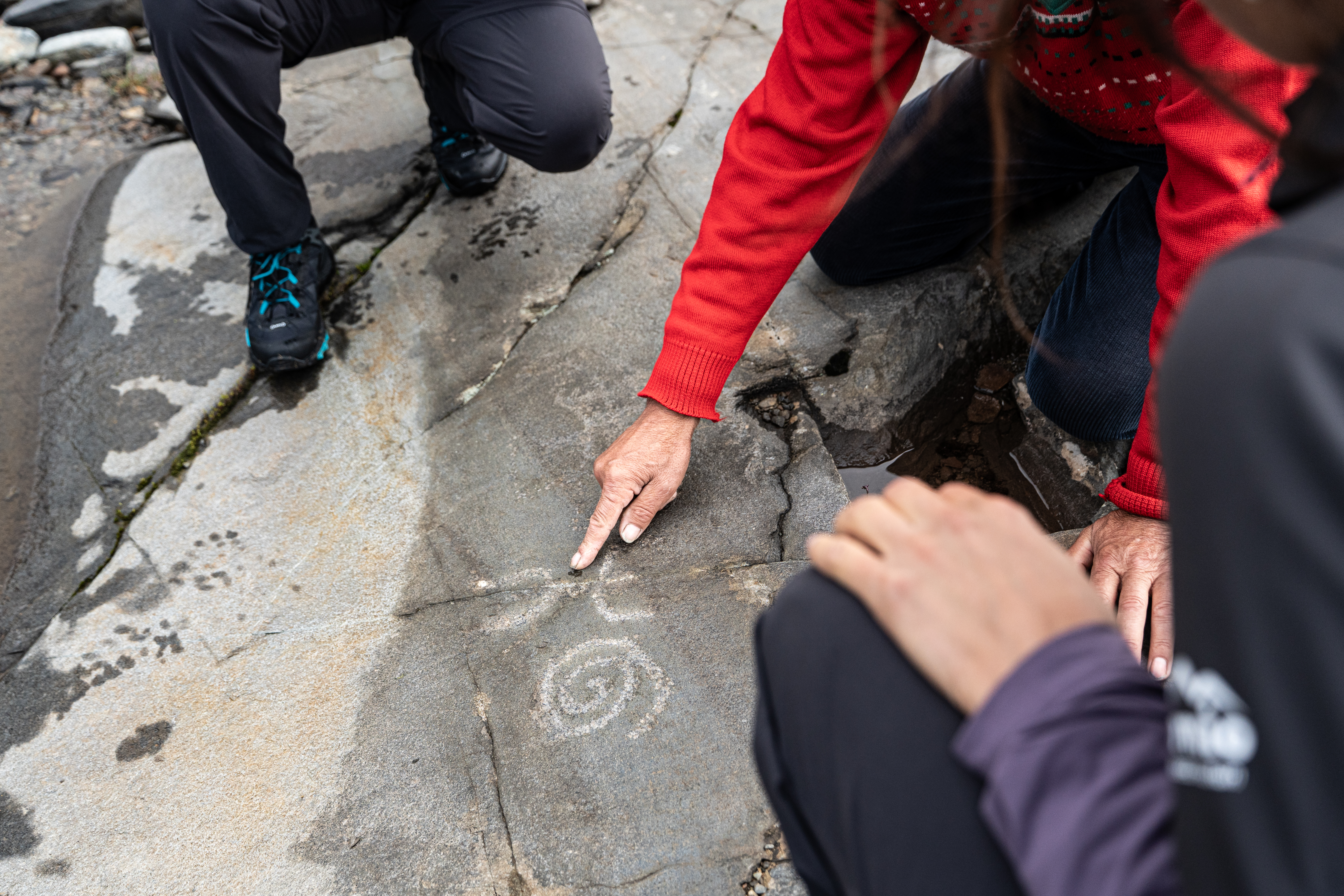
The journey through time continues in the Gavia Valley, where the gradual retreat of the glacier has brought to light thirteen rock carvings dating back to the Bronze Age.
Discovered in 2017 along the trail to Punta Segnale, they depict a praying figure with raised arms, a large spiral, a sheep and numerous cup marks: small hollows carved into the rock, probably associated with ancient rituals.
Their meaning still remains partly mysterious, but these engravings show that high-altitude areas were already visited by human communities thousands of years ago.

The mountains as home and workplace
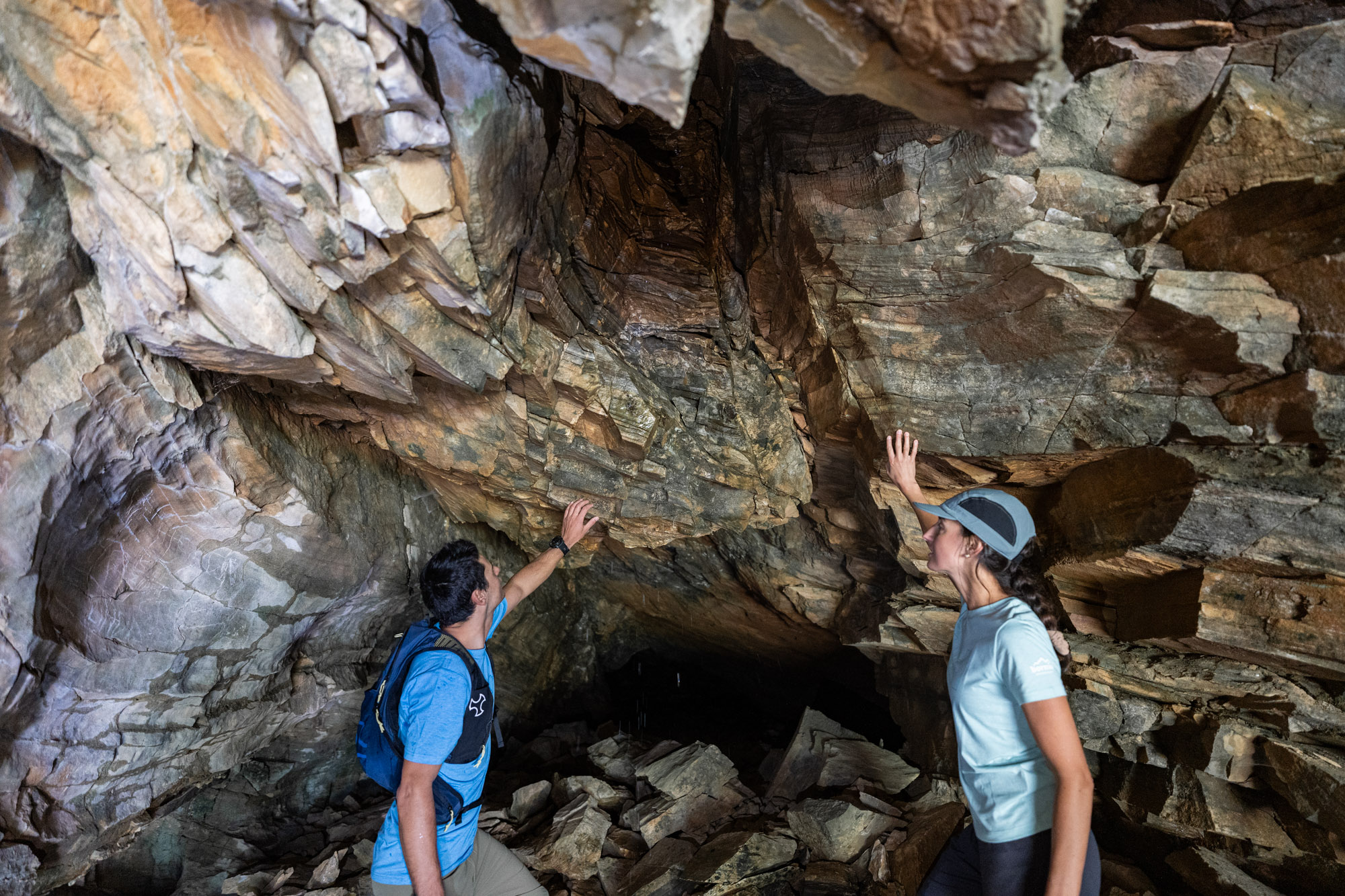
The history of life at high altitude can also be explored at the Edelweiss Cave in Valfurva, which for centuries was used as a shelter by shepherds during seasonal livestock migration.
Hundreds of names, dates and symbols are preserved on its walls, some dating back to 1722, offering a glimpse into everyday life and the deep connection between people and the mountains.
Today, the cave is the subject of research and three-dimensional surveys aimed at preserving and enhancing this valuable heritage.

Along the trails of the White War
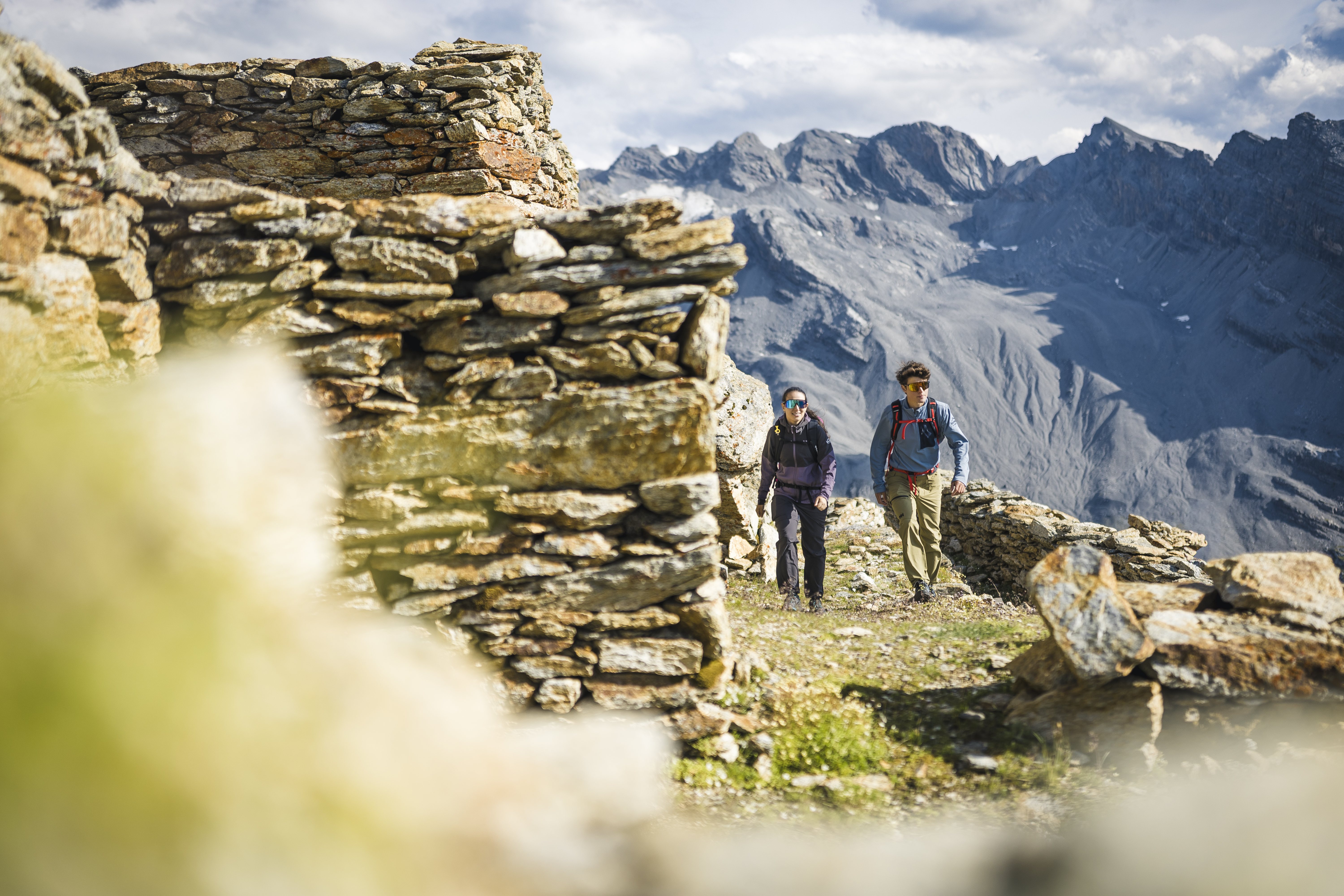
During the First World War, these mountains became the setting of the White War. Between the Stelvio Pass, the Forni Valley and the Gavia Pass, trenches, shelters, walkways and military villages can still be seen today, bearing witness to a conflict fought at altitudes of more than 3,000 metres.
To discover more about this chapter of history, the “Venini” Military Fort in Oga is not to be missed. Built in 1914 to defend the main mountain passes of Alta Valtellina, the fort is now open to visitors and offers a fascinating insight into life inside an Alpine fortress.

The charm of the historic centre
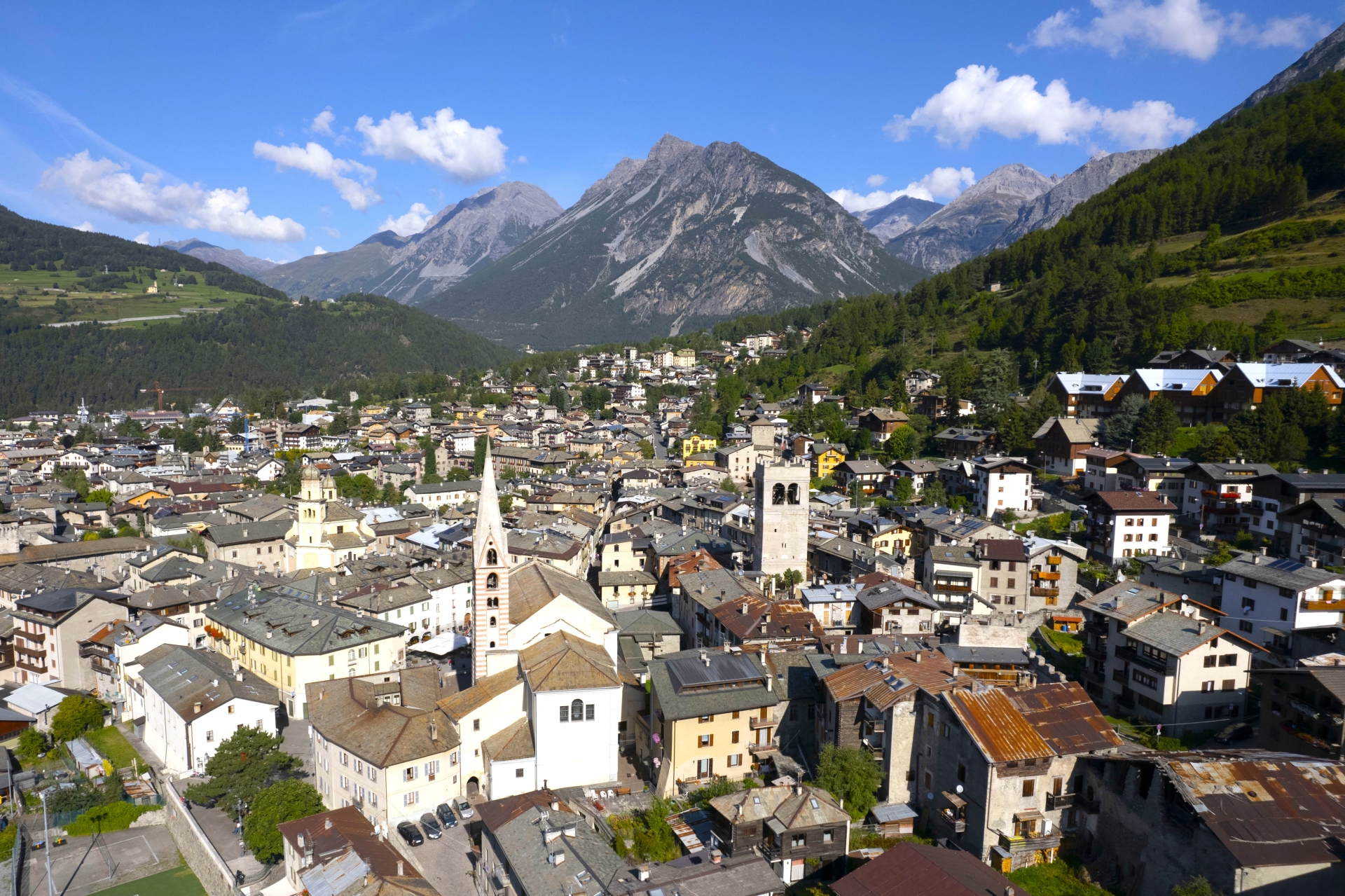
The journey continues into the medieval heart of Bormio, where squares, towers, churches and historic buildings tell centuries of history.
As you stroll through the streets of the old town, you will come across Piazza del Kuerc, the Torre delle Ore, Palazzo del Podestà, the Church of Santo Spirito and the Ponte di Combo, all reminders of Bormio’s historic role as an important centre for trade and travel across the Alps.

Where to discover more about the area’s history
To explore the historical and cultural heritage of the area in greater depth, visit the Bormio Civic Museum, the Valfurva Valley Museum, the Oga Military Fortress and the Acquateca in Santa Caterina Valfurva. Together, these places tell the story of the area’s evolution, local traditions and the memory of the White War.
From dinosaur footprints to the traces of the First World War, Bormio preserves a history spanning millions of years. A heritage to discover step by step, guided by curiosity and by looking at the landscape with new eyes.