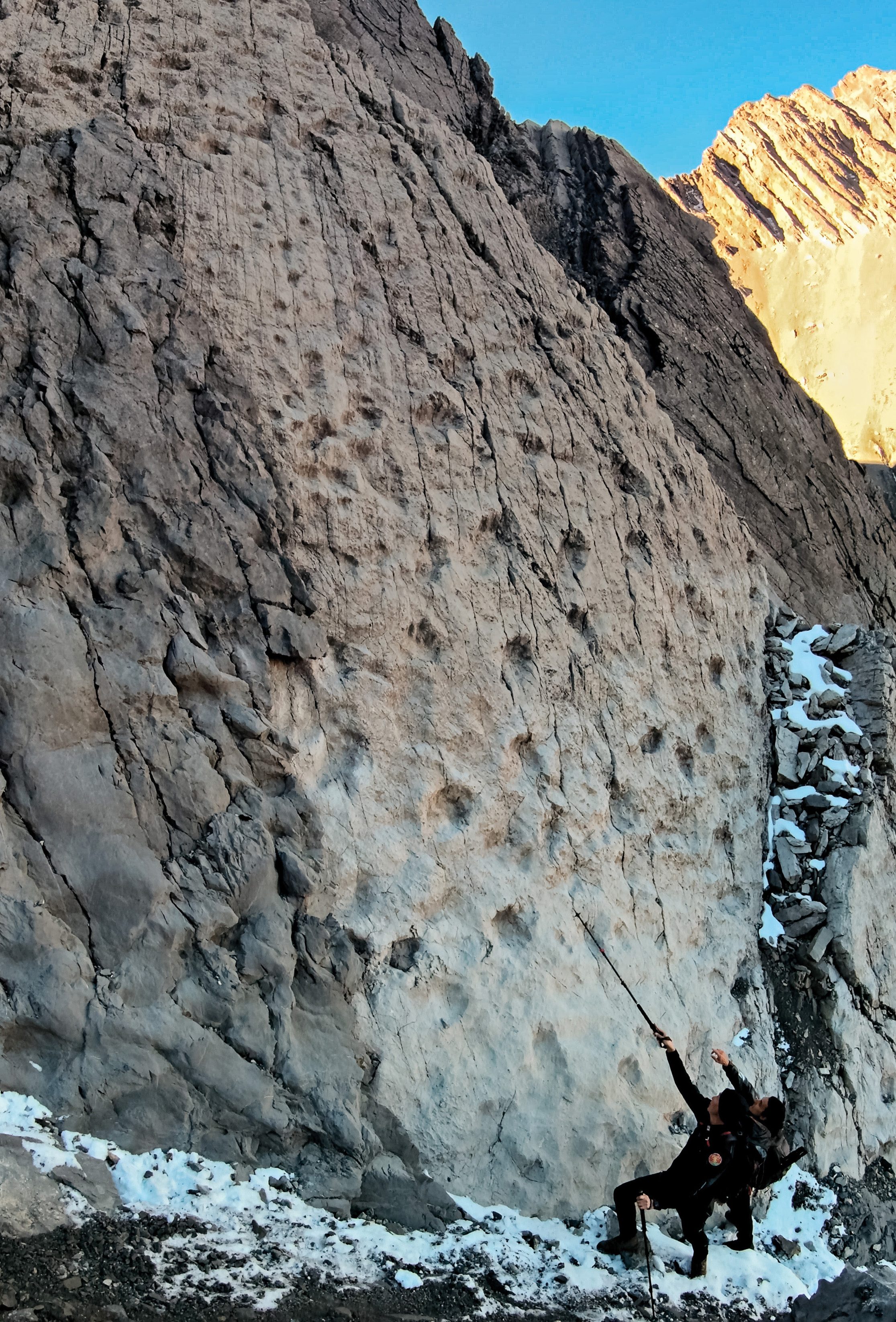
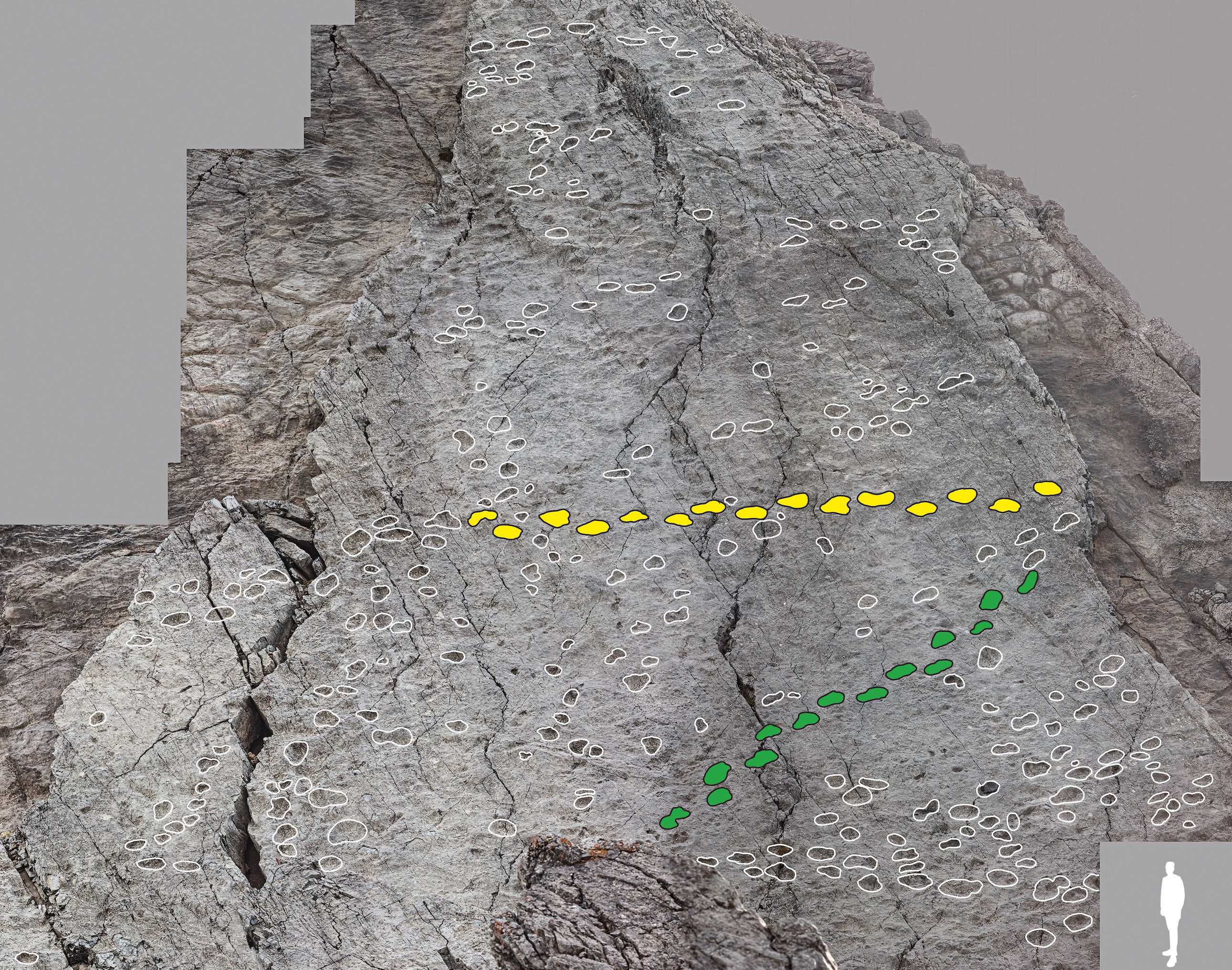
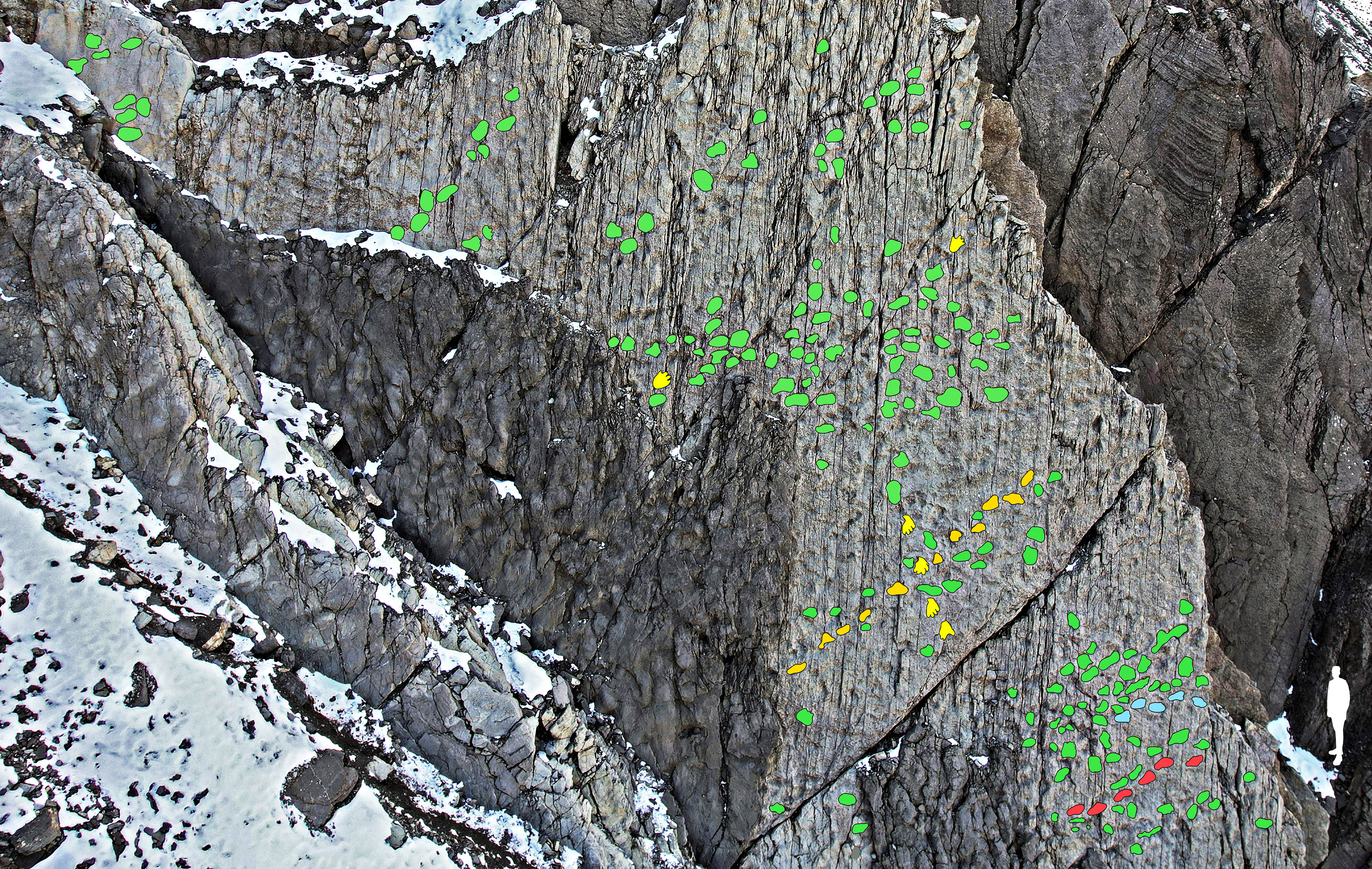
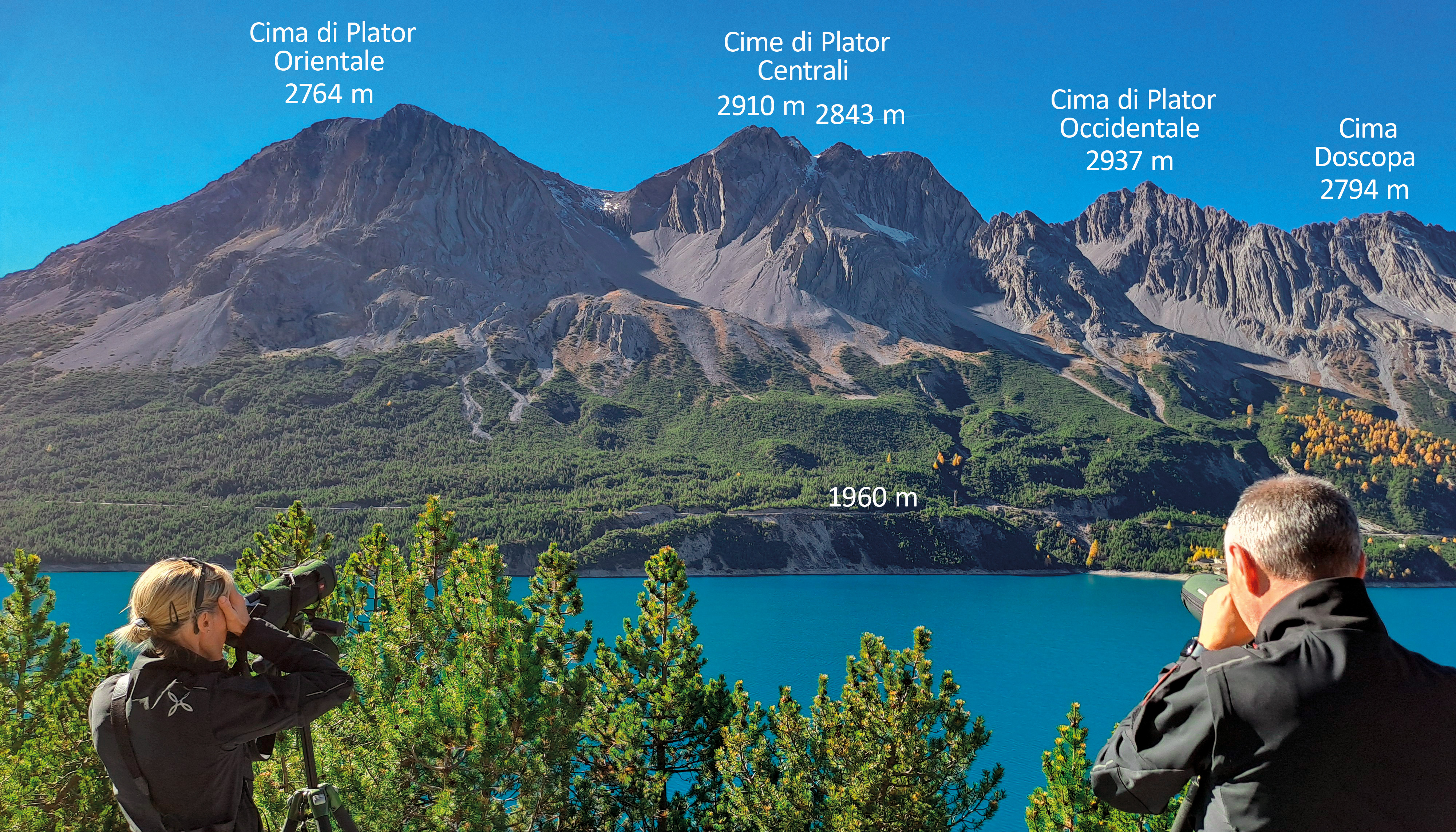
On vast, almost vertical dolomite cliffs, tracks of herbivorous dinosaurs stretching for hundreds of metres have been discovered, bearing witness to a past dating back some 210 million years, to the Late Triassic period.
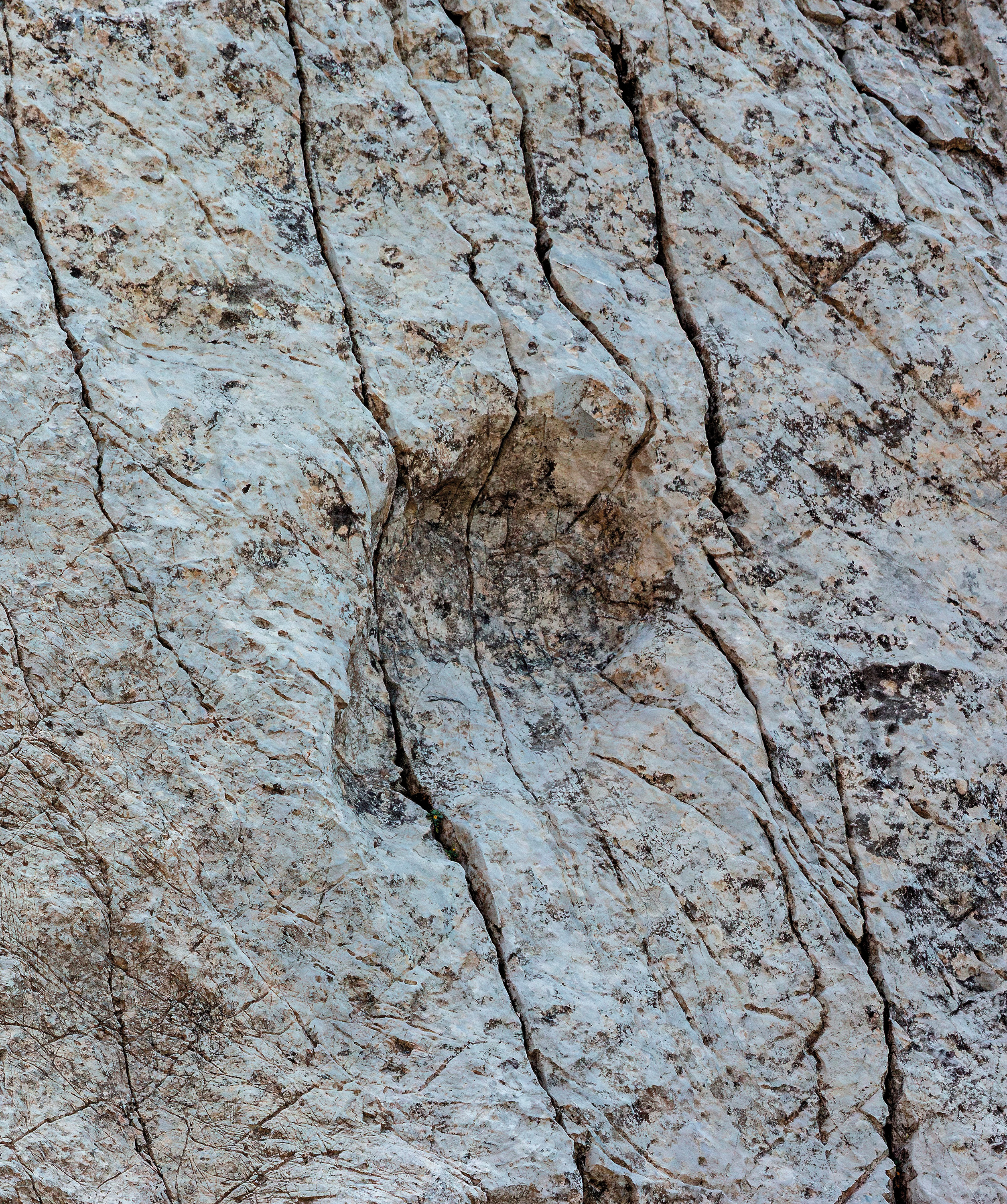
The tracks, preserved in excellent condition despite the altitude, show imprints of toes and claws on tidal flats. The most numerous tracks are elongated in shape and were largely produced by bipedal animals. In the best-preserved ones, traces of at least four toes can be seen. In some cases, handprints are found in front of the footprints; these are wider than they are long and smaller in size. At these points, the animals had probably stopped, resting their forelimbs on the ground.
Who do these footprints belong to?
Prosauropod dinosaurs, long-necked, small-headed herbivores, are considered the ancestors of the large Jurassic sauropods (such as the famous Brontosaurus). They were robust in build and had sharp claws on both their hands and feet. In some species, adults could reach a length of 10 metres. There are several types of prosauropod footprints, which have different names depending on the anatomical details they display. Those most similar to the Stelvio dinosaur footprints belong to the Pseudotetrasauropus group. However, it is also possible that these footprints belong to a yet-unknown ichnospecies, which will need to be given a new name.
Why are the footprints on a vertical cliff face?
The current position of the layers containing the footprints is not their original one, but is the result of the massive geological deformations that led to the formation of the Alps. In those days, this area was part of the coastline of the ancient Tethys Ocean, along whose shores herds of prosauropods walked, leaving their footprints in the calcareous mud. Between 227 and 205 million years ago, the rocks that now make up these mountains formed as limestone sediments in shallow-sea carbonate platforms with environments similar to those of today’s tropical regions, featuring tidal flats stretching for hundreds of kilometres to the horizon. Covered and protected by other sediments and transformed into stone, the footprints were pushed by geological processes to an altitude of over 2,400 metres, tilting to an almost vertical angle. With the uplift of the Alps and the erosion of the mountain slopes, they have come to light once again.
Is it possible to reach the dolomite cliffs on foot?
No, the cliffs are not accessible on foot; they are located in very steep and rugged terrain, which makes approaching them dangerous as there are no paths.
However, it is possible to view them from a distance: with a good pair of binoculars or a telescope, from certain points along the road that takes you round the Cancano Lakes, you can get an idea of the incredible number of footprints imprinted on the rock.
The Stelvio National Park will ensure that these observation points are clearly marked and will organise various themed activities and viewing sessions from the designated spots along Lake Cancano, to make them more accessible.
The coordinates of the sighting points are as follows: